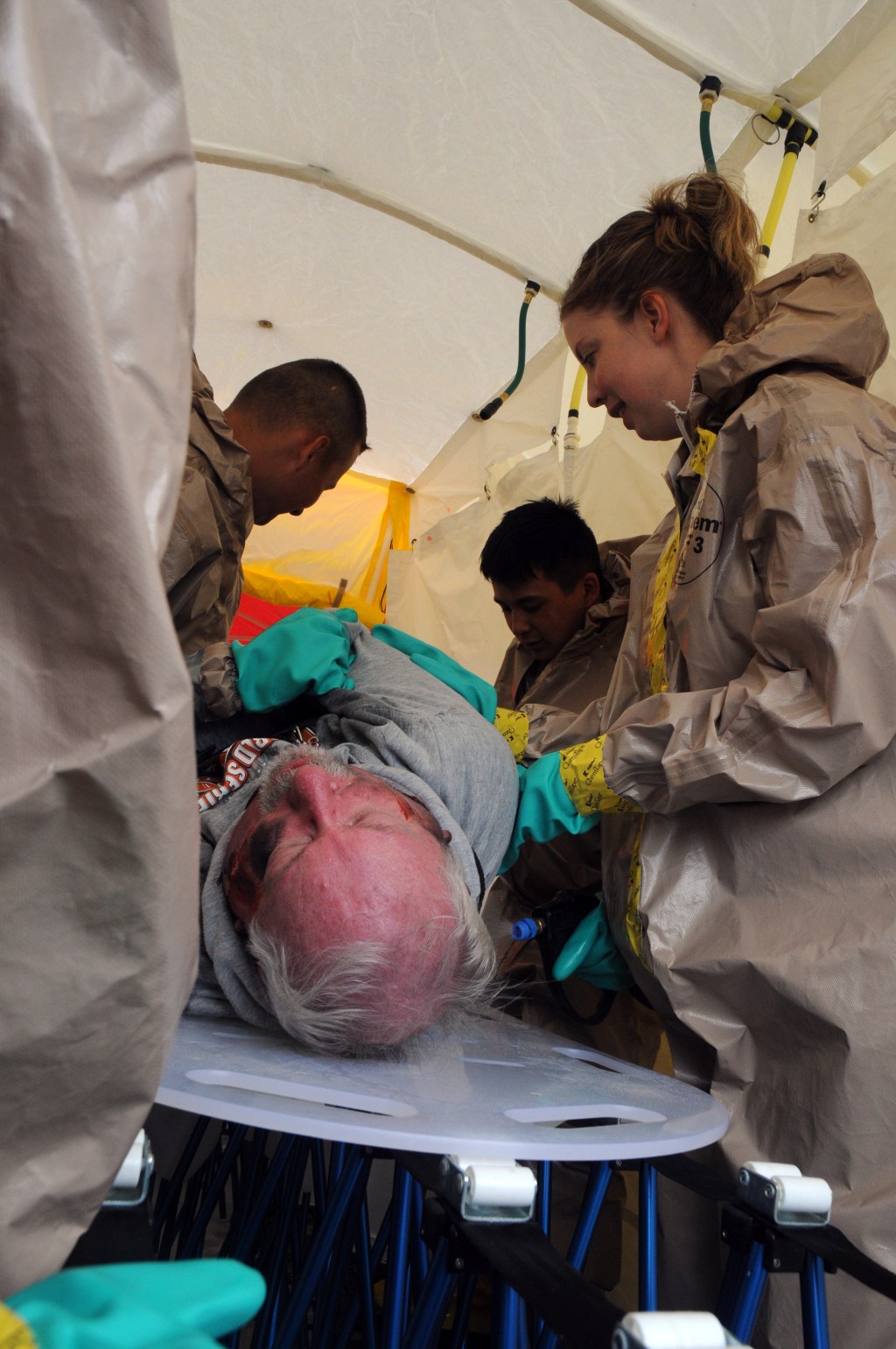
With doctors continuing to treat victims of the Orlando massacre, and the increased likelihood of more terrorist attacks in the United States, the National Academies of Sciences, Engineering and Medicine on Friday urged increased greater collaboration between civilian trauma centers and the U.S. military.
Arguing that a national trauma system — to include cross-training and treatment between military and civilian first responders, physicians and other medical personnel — could save American lives at home and on the battlefield, researchers called for the White House to spearhead a fully integrated system, with the aim to achieve “zero preventable deaths after injury.”
Donald Berwick, chairman of the committee that developed the report, “A National Trauma Care System: Integrating Military and Civilian Trauma Systems to Achieve Zero Preventable Deaths After Injury,” said improvements in emergency medicine as well as combat trauma have saved lives but that a fifth of deaths by accident or injury could still be prevented.
“Both the military and civilian sectors have made impressive progress and important innovations in trauma care, but there are serious limitations in the diffusion of those gains from location to location,” Berwick said. “With the decrease in combat and the need to maintain readiness for trauma care between wars, a window of opportunity now exists to integrate military and civilian trauma systems and view them not separately, but as one.”
Improvements in combat casualty care in the past 15 years have reduced the military casualty rate to historic lows, according to medical professionals at the U.S. Army Institute of Surgical Research.
But a 2013 study estimated that nearly a quarter of the 4,596 combat deaths from 2001 to 2011 were potentially survivable, and about 90 percent of those deaths occurred before the injured troop reached a medical facility, indicating that improvements could be made in medical care at the point of injury.
According to the National Academies’ study, trauma, either from accidents, falls, car crashes or gun violence, is the leading cause of death for Americans under age 46. In the analysis, the panel concluded that as many as 20 percent — or about 30,000 — of the 147,790 U.S. trauma deaths in 2014 may also have been preventable with optimal care.
The academies report comes as Congress continues to pressure the Defense Department to open up more military hospitals to complex civilian cases. The move, members argue, would allow military personnel to maintain skills honed in the last 15 years of war and practice new techniques.
Several military trauma surgeons testified earlier this year that they train on their own time at civilian hospitals and pay out of pocket for advanced courses to practice their talents.
The National Academies committee suggested that each element of trauma care, from emergency services at the accident scene to hospitalization and rehabilitation, could benefit from a “national system grounded in sound learning health system principles.”
“Mass casualty incidents and increasing foreign and domestic threats to homeland security lend urgency to the translation of wartime lessons to civilian trauma systems,” the committee said.
Patricia Kime covers military and veterans health care and medicine for Military Times. She can be reached at pkime@militarytimes.com.