UNITED NATIONS — The Latest on U.S. efforts to curb North Korea’s nuclear program (all times local):
8:15 a.m.
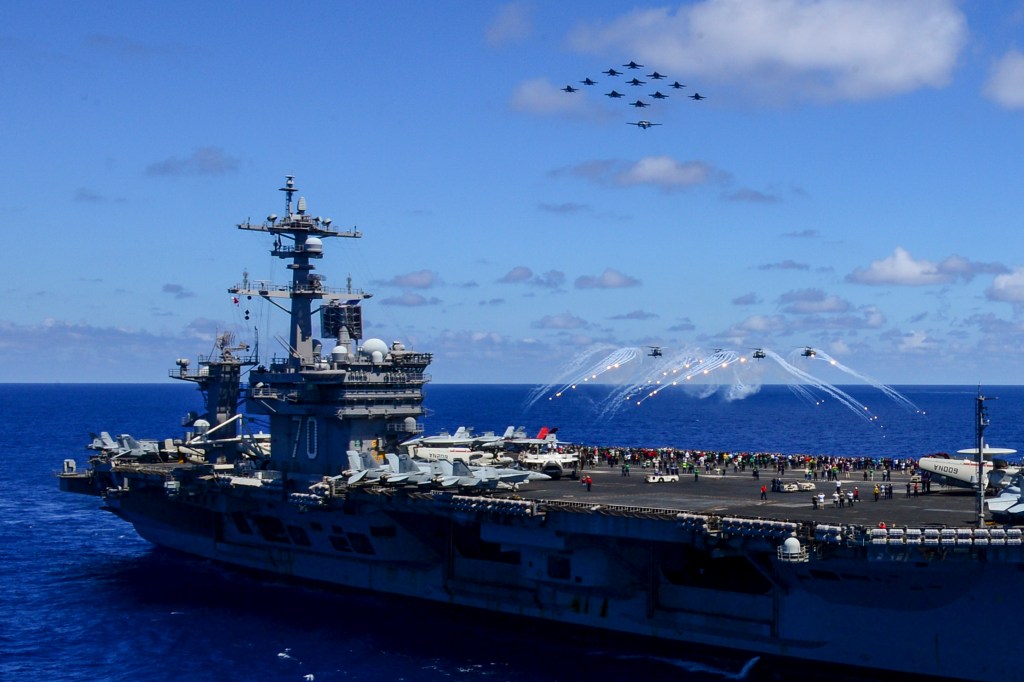
Japan’s defense ministry says two Japanese F-15 fighter jets have participated in the ongoing joint exercise between the USS Carl Vinson strike group and two Japanese destroyers.
Japan’s Air Self-Defense Force says the joint air and maritime exercise took place Friday in areas east of Japan’s southern island of Okinawa.
Two Japanese destroyers, the Samidare and the Ashigara, have been conducting naval exercises with the Carl Vinson as it heads north toward the Korean Peninsula for a joint exercise with South Korea.
Defense Minister Tomomi Inada told reporters that the exercises “would further strengthen the overall deterrence and response capabilities of the Japan-U.S. alliance, and showcase our country’s commitment and high ability in serving the regional stability.”
___
7:35 a.m.
The U.S. will urge the U.N. Security Council to increase economic pressure on North Korea over its nuclear weapons program and to lean on China to turn the screws on its wayward ally.
U.S. Secretary of State Rex Tillerson is meeting with allies Japan and South Korea before chairing a ministerial meeting of the U.N.’s top decision-making body. The U.S. wants to tighten the implementation of sanctions and build international resolve to isolate North Korea so Pyongyang eventually disarms.
That’s a goal that has eluded U.S. administrations for two decades, and the threat is intensifying. North Korea may already be able to strike its U.S.-allied neighbors with a nuclear-tipped missile, and could have the U.S. mainland within range by the end of President Donald Trump’s first term.
___
4:12 a.m.
China’s foreign ministry has refused to confirm or deny U.S. Secretary of State Rex Tillerson’s assertion that Beijing has threatened to impose unilateral sanctions on North Korea if it conducts further nuclear tests.
Ministry spokesman Geng Shuang repeatedly avoided giving a direct answer when asked about the matter at a daily press briefing.
Tillerson said China told the U.S. it had informed North Korea China would respond to a test by “taking sanctions actions on their own.”
China wants North Korea to end its nuclear weapons program, but has opposed unilateral sanctions imposed without a U.N. mandate.
Beijing has come under growing U.S. pressure to use its leverage as North Korea’s largest trading partner and main source of food and fuel aid to compel Pyongyang to heed U.N. resolutions.