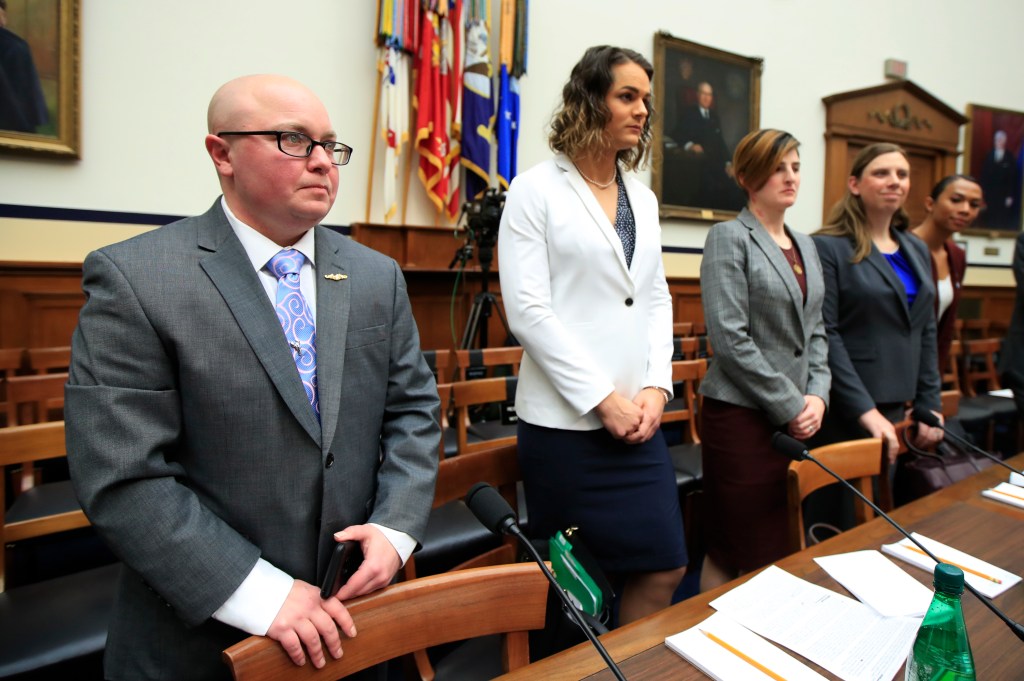
The Pentagon’s new transgender policy cleared a final legal hurdle Tuesday, meaning new limits on whether troops who identify as other than their biological sex may serve may be implemented within weeks.
On Tuesday, the U.S. Court of Appeals for the District of Columbia Circuit removed the last of four court injunctions lower federal courts had issued on the new policy, which had until today kept the Defense Department from prohibiting forces from serving who experience gender dysphoria, which is a discomfort with one’s biological sex. Transgender personnel who are willing to serve according to their biological sex, or who have already completed their transition to their preferred sex and are stable would be allowed to remain in the military.
DoD had previously announced it would move forward with its new policy, but retracted that when it became clear the final injunction was still in place.
With Tuesday’s decision and removal of that last injunction, “at the moment, there is no legal barrier to the government’s intended plan to start enforcing the ban on April 12,” said Perry Sacks, a spokesman for the various attorneys representing transgender clients.
Shannon Minter, an attorney for the National Center for Lesbian Rights who represented clients in two of the four federal lawsuits, said they still have until Friday to seek a rehearing on this issue, but that rehearing request has no significance now that the final injunction has been lifted.
Those advocacy groups may still pursue other legal options, including seeking a new injunction through the Court of Appeals or other avenues, Minter said.
“We are weighing all those options,” Minter said.
However, Thursday’s ruling in some respects seemed to be a chapter ending on a policy fight that began unexpectedly in summer 2017 with a tweet from President Donald Trump. In the more than year and a half since, the Pentagon has refined its transgender policy and seen some legal setbacks on the issue, which impacts approximately 9,000 service members.
Minter said that policy “is already wreaking havoc in the lives of dedicated transgender troops who must now face the grim choice of suppressing their identity or leaving military service, to the detriment of their fellow service members and national security.”